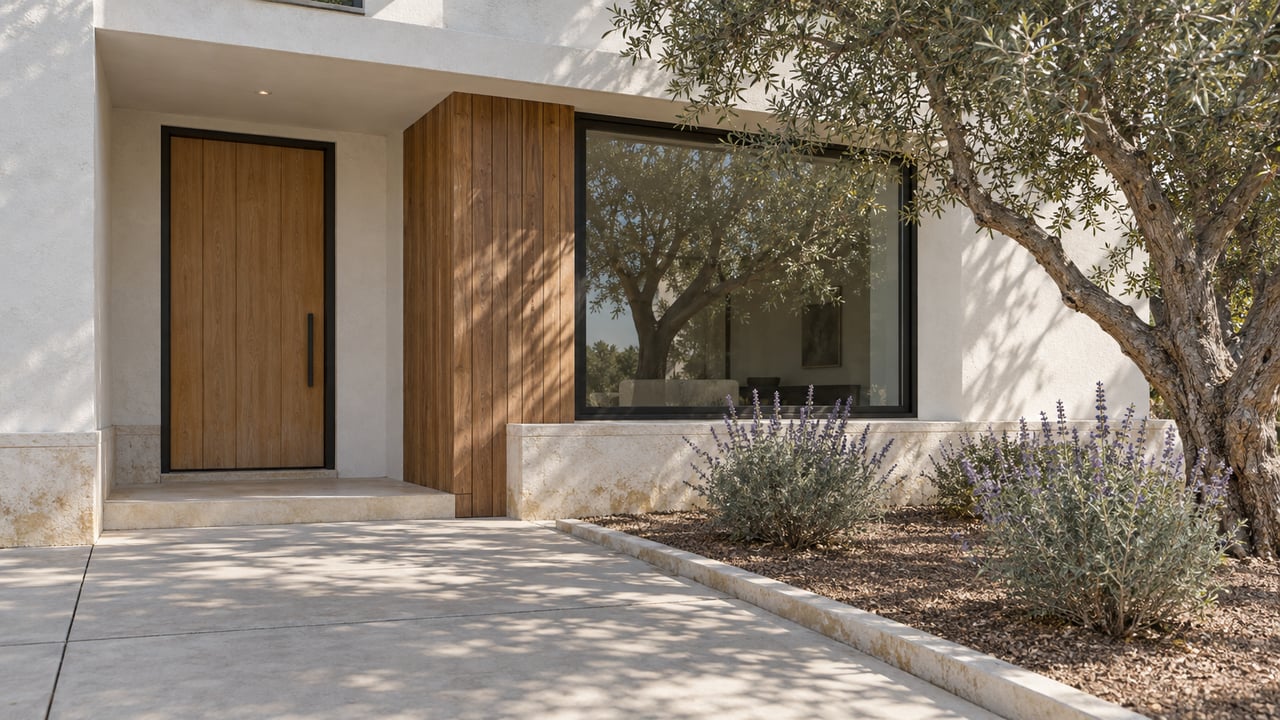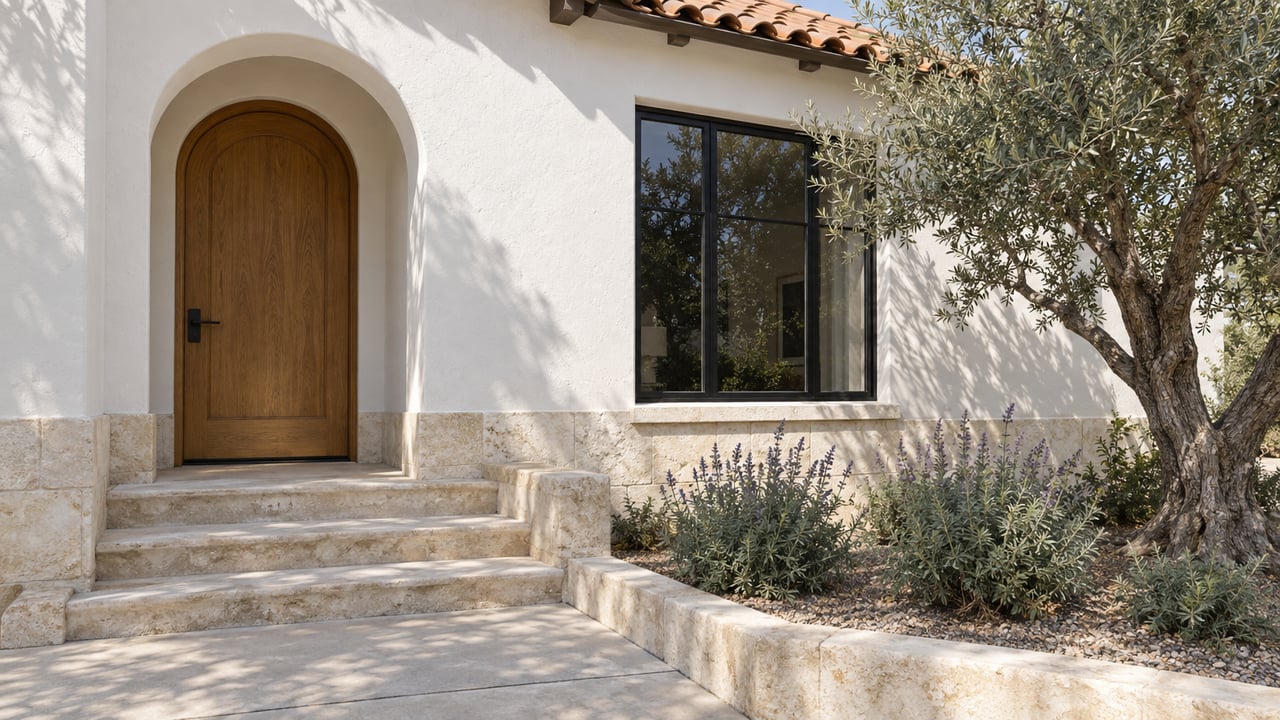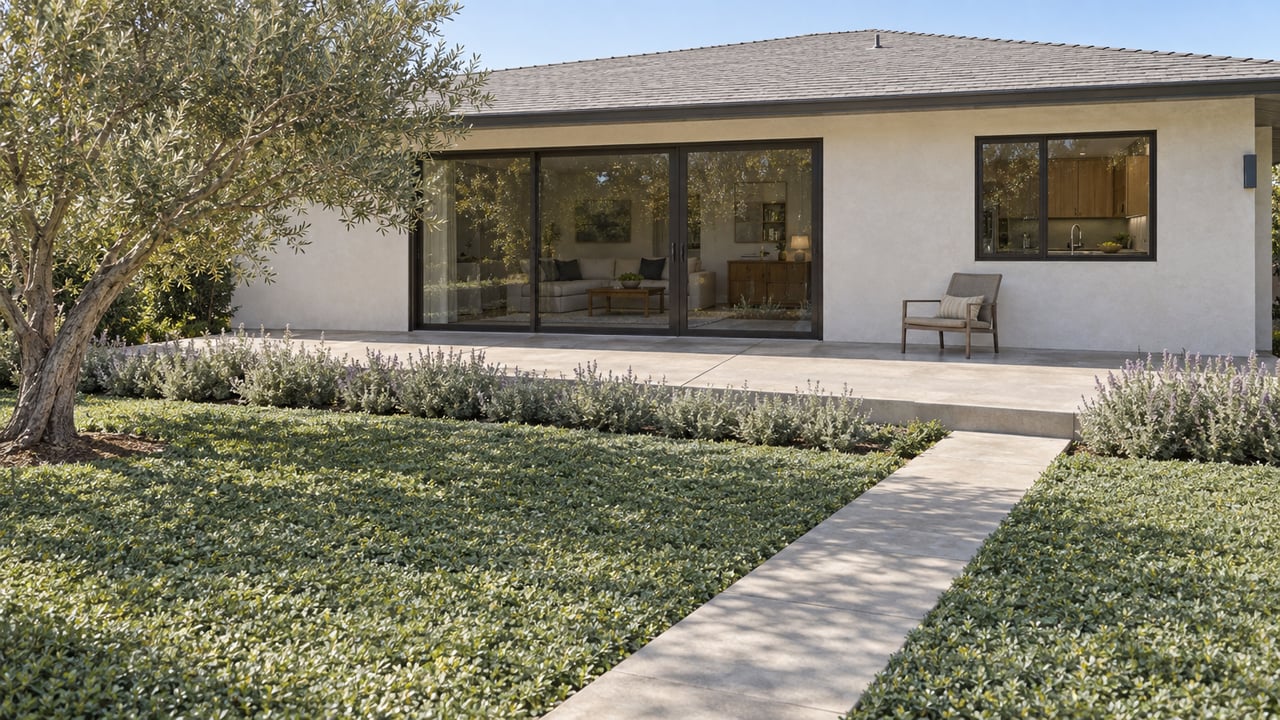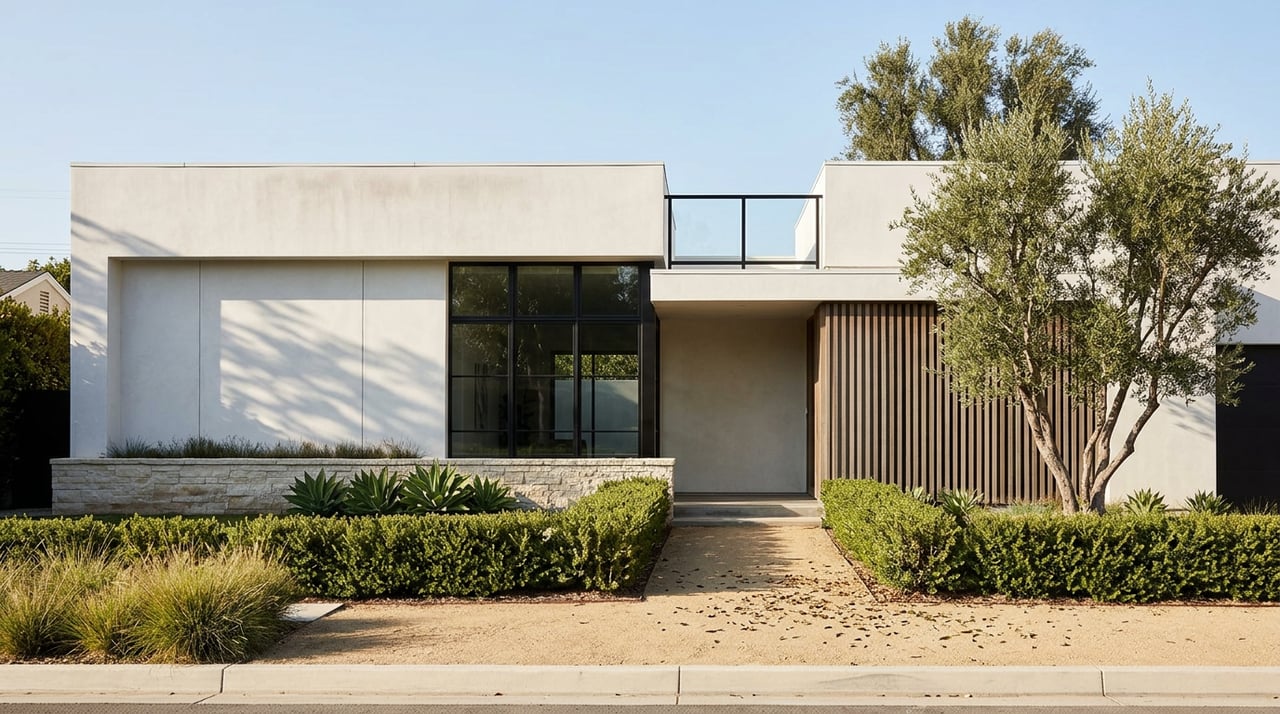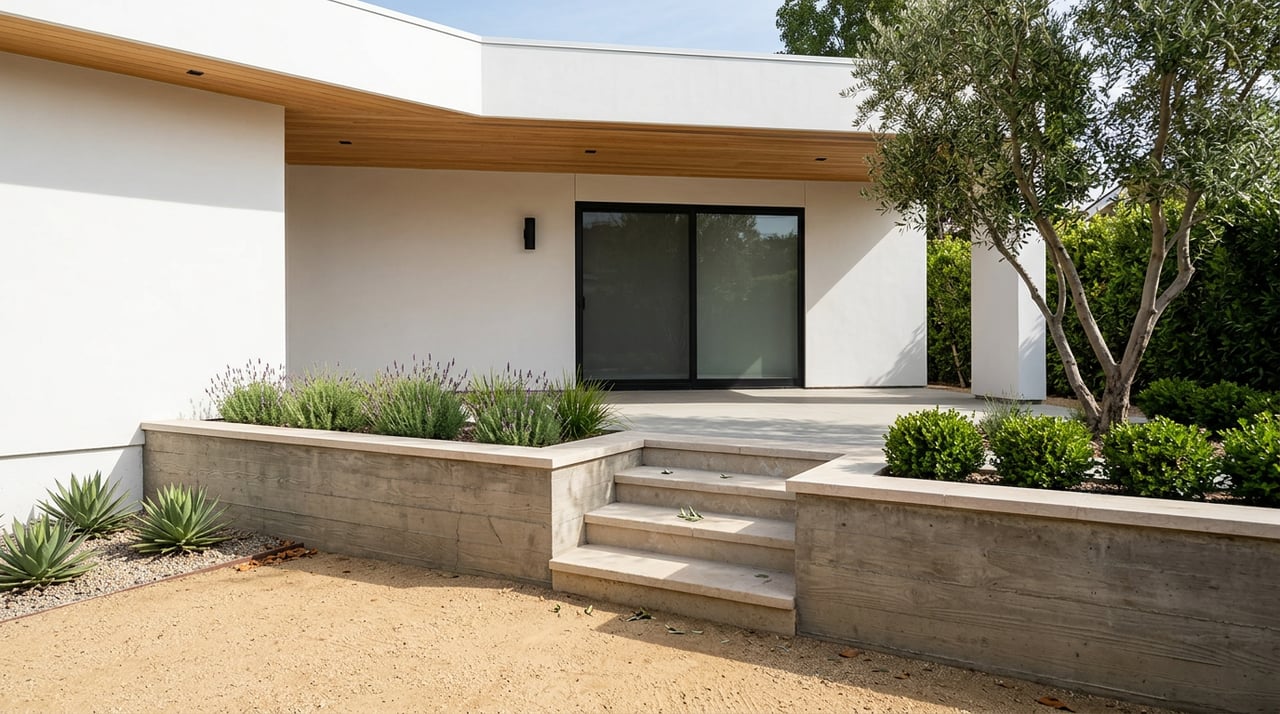
Two Sherman Oaks listings hit the market this summer, both on 10,000 square foot lots, both asking within a few thousand dollars of each other. One sits three blocks north of Ventura Boulevard on a flat interior street. The other clings to an upslope in the hills behind the boulevard. On paper they are comparable. In practice, one of them will give a family roughly 6,750 square feet of usable ground, and the other will give them about 3,000. Same lot size on the tax roll. Different products entirely.
That gap is the story the blended median hides, and it is the reason so many Sherman Oaks buyers write their first offer on the wrong side of the boulevard.
The blended median is the wrong number to shop with
If you have been watching Sherman Oaks on the portals for a few months, you have seen the number bounce. Todd Jones's July 2026 working snapshot put the neighborhood median near $1.285 million with roughly 2.4 months of supply and a blended price per square foot around $710. Zillow's home value index for the neighborhood landed at $1,284,898 in late May 2026, down 2.5% year over year. Redfin's three-month reading ending May 2026 came in at $1.3 million with 56 days on market. Houzeo's February 2026 read was $1,495,000. And a ZIP-level look at 91423 as of December 2025 showed a $1,704,500 median sale price.
Same neighborhood. Five sources. A spread of more than $400,000.
That spread is not a data quality problem. It is a signal. Sherman Oaks is not one market. It is at least two, and any average that mixes hillside estates, flats bungalows, and Ventura Boulevard condos will move around depending on which side of the boulevard closed the most homes that month. If your search rests on the headline number, you are shopping against a moving target that reflects sales you would never write an offer on.
What south of Ventura is actually selling
South of Ventura Boulevard, roughly 80% of the land sits inside the Santa Monica Mountains, which is why the streets stop making a grid and start curving into cul-de-sacs, canyons, and ridgelines. That geography is the entire pricing engine. Entry pricing for the mid-century canyon homes down here starts around $2 million, and the premium is not paying for square footage. It is paying for the view corridor, the privacy of a quiet block, and the architectural personality that hillside lots invite.
The catch is what a hillside parcel actually gives you to work with. A 10,000 square foot upslope lot can yield only about 3,000 square feet of functional yard once slope band analysis, hillside ordinances, drainage requirements, and retaining walls have taken their cut. You are still paying for 10,000 square feet on the deed. You will not be entertaining on 10,000 square feet.
This is where the transaction friction lives. If you are underwriting a south-of-Ventura home the way you would underwrite a flats home, your addition, your ADU, or your future pool becomes a design exercise governed by the Los Angeles Department of Building and Safety's hillside rules rather than a simple permit pull. The LADBS ADU standard plans work beautifully on a flat rear yard. On an upslope with a 30% grade, "feasibility" is a longer conversation.
What north of Ventura is actually selling
North of the boulevard, the terrain flattens and the housing stock changes with it. The standard 1930s and 1940s lot measures 6,750 square feet, with oversized flats parcels running 10,000 to 11,000. Detached homes on these streets trade from roughly $1.1 million into the upper $1 millions depending on remodel level, bedroom count, and system condition. The dollar-per-square-foot number is not always lower. The usable-ground-per-dollar number almost always is.
The housing mix north of the boulevard is also broader. ZIP-level structure data for 91423 shows roughly 36% single-family and 64% multi-family stock, which is why so many of the neighborhood's condos and townhomes cluster around commercial nodes and the Sherman Oaks Galleria area. If your search includes a low-maintenance townhome next to Ventura Boulevard rather than a detached home on a canyon street, you are shopping a completely different inventory pool that happens to share a ZIP code with the estate market.
The school-anchor pattern reinforces the flats' pull for families. Public options like Sherman Oaks Elementary, Dixie Canyon Elementary, and the STEM and performing-arts program at Louis Armstrong Middle sit in the flats, along with Notre Dame High School. Private choices are scattered across both sides, with the Buckley School to the south and Campbell Hall and Carpenter Elementary in adjacent Studio City.
The migration arc that portal data cannot show
There is a pattern in Sherman Oaks resale that any listing agent working the neighborhood a few years running has watched play out repeatedly. Younger buyers, couples, and empty-nesters enter south of the boulevard because the aesthetic and the views justify the reach. When family growth demands a flat yard, they list the canyon home and rebuy in the flats. Then the next south-of-Ventura entry buyer picks up the canyon home, and the arc repeats.
That arc has two implications the portals do not surface.
First, the south-of-Ventura market absorbs a specific kind of buyer with a specific holding period. When rates move or design trends shift, that buyer pool thins fast, which is one reason days-on-market in the hills can stretch even while the flats stay competitive. Second, the flats market is more durable across cycles because school proximity, block culture, and usable outdoor space are needs that do not go out of style. The premium north of the boulevard is not always visible in per-square-foot math because it is being paid in resale predictability rather than in headline price.
How to price the difference when you tour
If you are comparing a north listing and a south listing this fall, the honest comparison is not the asking prices. It is what each parcel lets you do with the next five years. A short checklist for the tour:
- Ask for the usable yard square footage, not the lot size. On upslope parcels, get a rough slope-band read before you write.
- Match comps by side of Ventura and by story count. A renovated single-story south of the boulevard is a different market than a two-story flats home with the same bedroom count.
- Pull the permit history. Retaining walls, additions, and pool decks on hillside lots should be permitted. Unpermitted hillside work is one of the most common reasons a Sherman Oaks deal falls out during inspection.
- Stress-test the commute at your actual travel times. The 101 and 405 meet at the neighborhood's southwest corner, and the interchange behaves very differently at 7:45 a.m. than it does at 11:00 a.m.
- Look at true detached-home sales in your target pocket over the last 3 to 6 months. Blended condo and single-family data will pull your comps toward the wrong price.
A note on data source discipline: median price per square foot from any national portal is a starting point, not a valuation. The most accurate read on your specific block comes from CRMLS closed sales in the same slope condition, matched to lot usability rather than lot size.
FAQ
Is south of Ventura always more expensive than north? Not always, but the estate product concentrates south, and entry pricing for hillside homes tends to start around $2 million while flats detached homes begin closer to $1.1 million. The premium is real. Whether it is worth paying depends on how much of that lot you actually intend to use.
How much does the Sherman Oaks median change depending on the source? The July 2026 blended snapshot ran near $1.285 million, while the December 2025 91423 ZIP-level median sale reached $1,704,500 and mid-cycle 2026 readings from other sources fell between roughly $1.28 million and $1.7 million. The variation is a function of what property types closed in the window, not a data error.
Does the Sepulveda Transit Corridor change the calculus? Not yet. It remains a proposed project in planning and environmental review, so treat it as future potential rather than an existing amenity when you price a home.
Which side is better for a first home if I plan to grow into a family? Buyers who plan to add children in the next several years often find the resale mechanics easier in the flats because block culture, walkable school access, and flat usable yards hold demand across cycles. That does not make the hills a bad first purchase. It makes the second purchase more predictable.
If you are weighing a specific north-of-Ventura block against a specific south-of-Ventura canyon street, the numbers only mean something once someone has walked both lots and read both permit histories with you. That is the work Robert Ramos does on every Sherman Oaks search, and it is the difference between shopping the median and shopping the market. Book a free neighborhood strategy call and bring the two addresses you are stuck between. We will price them the way a local underwriter would, not the way a portal does. You can also start with the current Sherman Oaks neighborhood page for a broader look at what is moving on both sides of the boulevard.